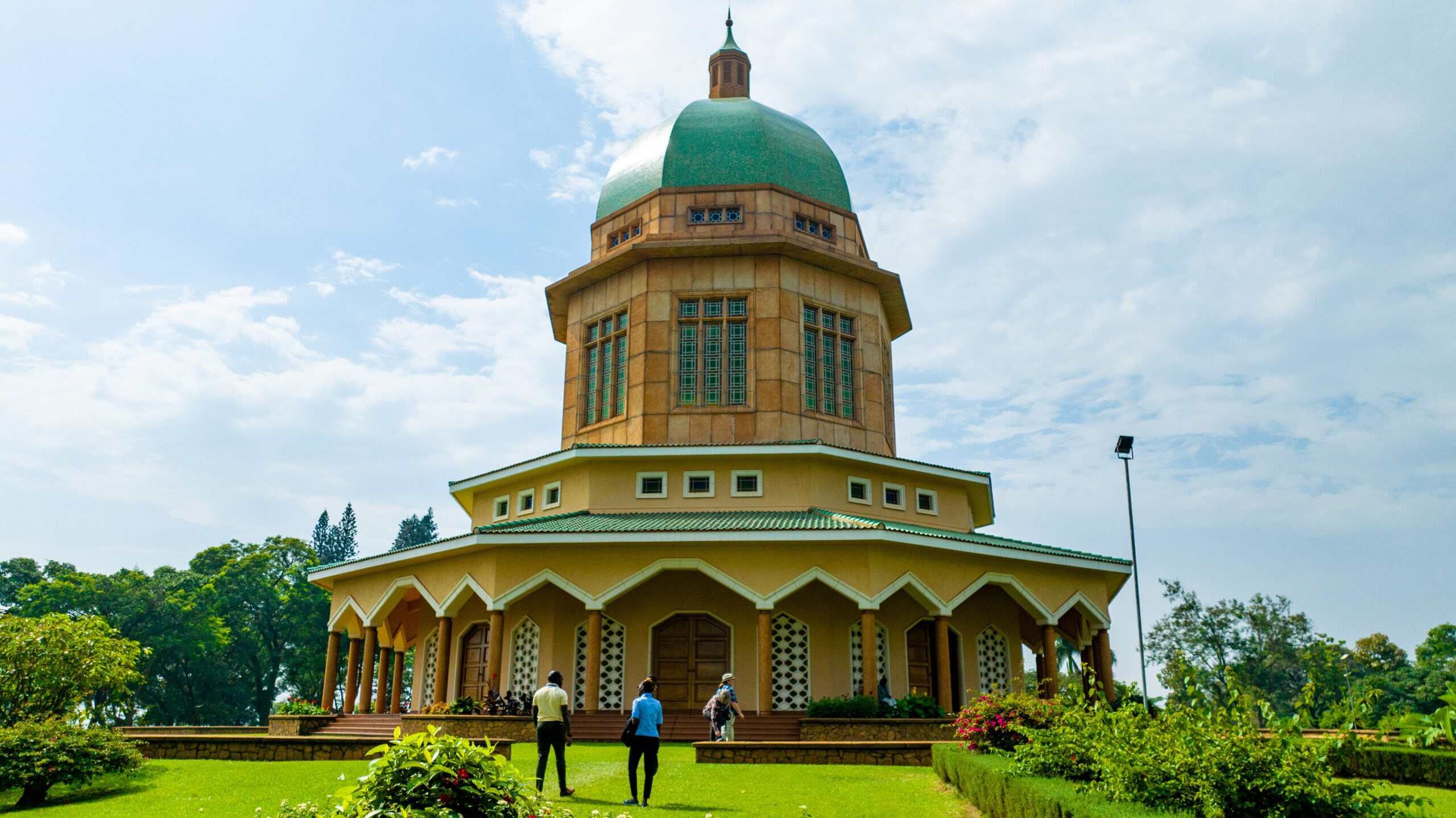
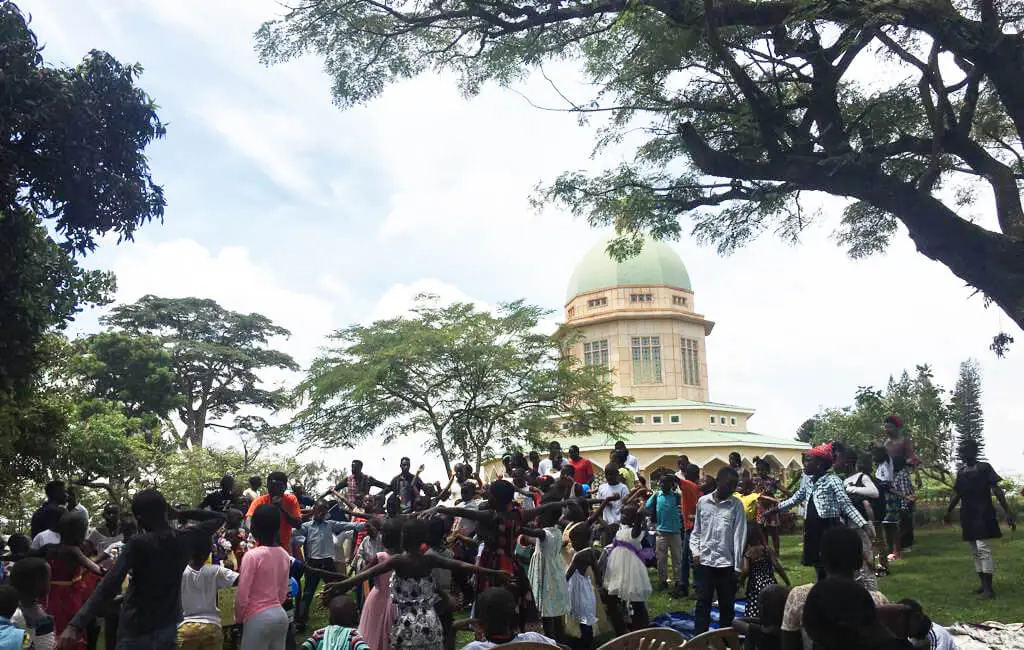
The Mother Temple of Africa is Africa’s first Bahá’í House of Worship, open to all, offering a sacred space for prayer and communion with the Creator. Every Sunday, a devotional program brings together Bahá’ís and friends in prayer and song.
Worship and service go hand in hand here: as ‘Abdu’l-Bahá envisioned, the Temple will grow to support the community through education, and other essential services. Today its grounds also house the National Bahá’í Community offices and the Training Institute.
Work done in the spirit of service is the highest form of worship.
- ‘Abdu’l-Bahá
Visiting Made Simple
Review our visitor guidelines, book a group visit, or stop by the Information Centre to learn more about the Bahá’í Faith.
Fill out this form to make booking arrangements for large group of visitors.
Visit Page
Information Centre
The Centre welcomes visitors who wish to learn more about the Bahá’í Faith.
Visit Page
Construction of Africa’s first Bahá’í House of Worship began in 1958 on Kikaaya Hill and the Temple opened to the public on 15 January 1961, welcoming about 1,500 people from diverse backgrounds at its dedication. Further milestones followed in October 1967 with the construction of the National Bahá’í Centre.
The Mother Temple of Africa is thoughtfully designed to harmonize with its natural surroundings, drawing inspiration from the form of a traditional African hut.
The inseparable principles of worship and service find their fullest expression in the House of Worship, known as the Mashriqu’l-Adhkár, meaning “the Dawning Place of the Remembrance of God.” Open to all people without distinction of age, gender, background, or religious affiliation, it serves as a centre of collective worship and community life, nurturing unity, fellowship, and a spirit of loving service.
Inspired by Bahá’u’lláh’s vision for humanity, the Bahá’í community strives to build a way of life that is both spiritually and materially prosperous, guided by the principles of worship of God and service to humanity. As ‘Abdu’l-Bahá urges, lives are to become “beautiful prayers,” expressed through acts of justice, compassion, and service—uplifting the poor, comforting the sorrowful, healing the afflicted, and bringing hope to those in need.
Visitation Days & Time
Open Days
Tuesday, Wednesday, Thursday, Friday, Saturday, and Sunday